By Hisham Jabi Palestinian American Thought Leader and CEO of Jabi Consulting
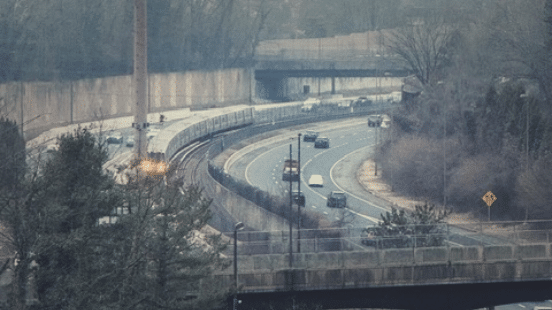
Today, I am sitting in my office off route 66 in DC area, watching the motorcades transporting guests from around the world as they arrive at Dulles Airport to attend the “Board of Peace” meetings in Washington about Gaza reconstruction. Delegations, diplomats, and envoys move swiftly under escort — a choreography of urgency and importance. Yet the scene is striking for its contrast: while the world’s decision-makers move freely across borders to discuss peace, millions of Palestinians in Gaza and the West Bank remain unable to move freely within their own land, where mobility itself has become a rare privilege rather than a basic norm.
From afar, it is easy to reduce Palestine to headlines, statistics, or political talking points. On the ground, it is a living nation ofover 5.5 million people — families, entrepreneurs, students, doctors, farmers, artists — spread from Rafah to Jenin, from Nablus to Hebron. A society with culture, cuisine, history, and an unbreakable connection to land and identity.
Today, nearly2 million people in Gaza face catastrophic humanitarian conditions, while youth unemployment across Palestinian territories exceeds 50%, among the highest in the world. Across the broader Middle East, more than 60% of the population is under 30, making this a region defined by its youth — and by the consequences of failing to engage them productively.

What is often missing from international discussions is not awareness, but implementation. Everyone speaks about Gaza and the West Bank; far fewer are investing at the scale required to rebuild institutions, restore economic life, and create a viable future. The “Board of Peace” is a largely abstract event for the average Palestinian. Decisions are being discussed about Palestine with limited meaningful Palestinian engagement.
Palestine is not only a crisis zone. It is also a reservoir of human capital. Palestinians have built successful businesses, academic careers, and professional communities across the globe. Those of us in the diaspora carry a dual responsibility: to succeed where we live, and to preserve our identity, language, and connection for the next generation.
Erasing a people is not achieved only by removing them from land; it can also happen by severing culture, memory, and continuity. That is why education, economic opportunity, and institutional reform matter as much as humanitarian aid. The Palestinian diaspora may be far from our homeland in body, but our commitment to Palestine lives deeply in our souls.
There is no sustainable path forward through perpetual conflict. Lasting stability will require leadership on all sides that prioritizes dignity, security, and economic viability for both peoples. History shows that unresolved conflicts do not disappear — they harden, deepen, and eventually return in more destructive forms if not addressed through a fair and durable solution. Maintaining the status quo in the heart of a region of over 500 million Arabs and more than 1.2 billion Muslims worldwide is simply not sustainable
What Palestinians need most now is not rhetoric, but agency: credible institutions, accountable leadership, free and fair elections, and a functioning economy capable of absorbing a young and ambitious population. Investment in human capital — education, technology, entrepreneurship — offers the clearest long-term pathway to resilience.
Despite despair on the ground, Palestinians have not lost their attachment to their homeland. Nor are Israelis leaving theirs. The reality — whether acknowledged or not — is that two peoples are tied to one land. The challenge is not geography; it is political will and mutual recognition.
From Washington, policy debates may feel abstract. In Gaza, Nablus, or Hebron, they determine whether families eat, study, work, or survive. Any credible solution must therefore be grounded in justice, security, and economic opportunity for all involved.
The stakes could not be higher — not only for the region, but for global stability. A generation without hope is a risk; a generation empowered is an asset.
The choice, ultimately, is whether to manage the conflict indefinitely — or to invest seriously in ending it.